Eaton Road Jewish Cemetery, South of Great Falls
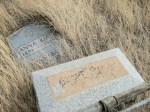
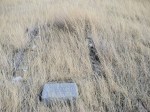
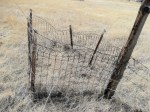
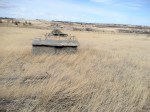
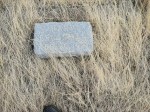
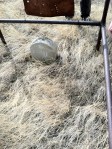
Yesterday I had the opportunity to take some photos at the historic Jewish Cemetery near Eaton Road.
This Summer, I propose that our congregation have a work party day there. Between road access, the fence, crumbling monuments, etc., we could make a very positive impact in this cemetery, which our congregation has managed since the early 1910s.







Minyan Call for the Funeral of Alan Silverstein, Thursday at 1 p.m.
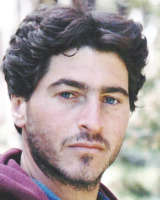
Allan Bruce Silverstein, 59, of Great Falls, a detention officer, died of natural causes Monday, March 12, at his home. There will be a gathering at Croxford Funeral Home at 1 p.m. Thursday, to proceed to the Old Jewish Cemetery, where a graveside service will be held. Rabbi Chaim Bruk of Chabad Lubavitch of Montana will officiate at the funeral and gravesite service.
Allan was born June 28, 1952, in Brooklyn, N.Y. He graduated from G.W. Hewlett High School in Hewlett, N.Y., went to Miami University, and also went to the University of Montana in Missoula.
In 1980, he married Jodi Cantor in North Woodmere. They divorced in 1992. In 1999, he married Kelly Daily in Great Falls. They divorced in 2007.
Allan is survived by sons Errol, Andrew and Daniel Silverstein; sisters Bonnie Shiner and Sheree Cohen; and brothers Michael Silverstein and David Silverstein.
He was preceded in death by his parents, Herman and Laura (Daskal) Silverstein
“The Best Dad Ever” Allan Silverstein was one of a kind. His unconditional support of the most majestic dreams was the breath of his selfless devotion to family, love and truth. The sincerity of this free spirit, who lived for everyone he loved first, putting their needs before his own, made the world a better place – always. In his compassion, he was perfect. We will love him forever and ever.
“Love you, you’re greatest, always be that way in my heart.”
Aitz Chaim TO HOST MIME ARTIST OFER GOREN MAY 3
The Aitz Chaim board has received the following e-mail message.
From: Motti & Chaviva Isaak
Date: March 10, 2012 3:48:14 AM MST
Dear friends
Shalom,
I hope you are well and enjoying a very happy Purim!
Ofer Goren, our wonderful mime artist, will be in the USA between April 29 and May 13. He will perform with his new program.
Please let me know ASAP if you are interested in his visiting your community.
As soon as I hear from you, I will send you a proposed schedule for his visit.
Thank you and all the best,
Motti
Ofer Goren’s program has been a good one, but our audience participation in the past has been rather minimal. If we are interested in having him come, then we need volunteers to organize it, and to help set it up and take it down.
An event organizer would be responsible for the following:
* Secure Location for the event
* Secure Lodging for Ofer
* Arrange Advertising for the event
Stephen Boyd has volunteered again to organize this event. Please watch your Ram’s Horn for further information as it becomes available.
PASSOVER POETRY
Passover / Pesach begins either in March or April, when the beauty of Springtime and the renewal of life blossoms before our eyes. This has inspired many Jewish people to write Passover poetry. Passover poetry / Pesach poetry consists of anything from a poetic description of the Passover / Pesach rituals performed, such as those for the festive meal(s) known as the Passover / Pesach Seder, to a poetic comparison of the Passover / Pesach festival with the magnificence of the Springtime season.
“Passover Suite” : Poems For Passover
by Ray Shankman
Why Is This Night Different?
Why is this night different
now that we are older
and our children are with us
each one of us crosses the same desert
helping the stragglers
lifting the forlorn and lost
helping life into life
helplessness into healing hope
we are here together
hearing each story as if it were our own
committed to keeping the story alive
the journey going
Dancing Into Freedom
Why is this night different
from all other nights?
Tonight we found Israel
in each other
and I danced with Deena
first daughter of Israel
giggling at our miracle
dancing leaps joyous
before the Lord
The wine was sweet
our eyes drank to eternity
every sip warmed our love
gave us life.
Even Elijah stayed for a dram
saying, “Your fare is simple, mere matzot and cheese
but that’s the way it used to be
when we truly wondered
in our freedom.”
Seder Renewal
Brothers and Sisters
let us order ourselves around this table
to negotiate new covenants;
let’s rewrite our tragedies;
let’s renew history;
let’s translate our enslavement into the freedom of this moment.
Together we endured suffering; now
let’s share a certain future:
past afflictions can be transformed
into renewed blessings;
let us break bread and sing praises to life;
let our Hallelujahs resonate deeply as a tikkun nefesh.
Heal my soul. O Lord heal others so I can be healed.
Let us sing on each cup of wine that zest for life
that brings us home to this table,
to the singing of this story,
our arms about one another
Dancing into freedom.
Source of the above Passover poems article: Canadian Jewish News, v.31(16) April 5, 2001, page B7. Re-printed with permission from The Canadian Jewish News.
—————————————————————————————————————-
The Telling
by Brenda Spigelman Ajzenkopf
Why is this night unlike all others
Are questions the youngest must say
We recline, we pray, we ask the Almighty
Please deliver us from Egypt this day.
Bitters and herbs are ours to consume
To remember the Exodus then
We eat, we drink, we cross the waters
Are pursued by Pharaoh and his men.
The Haggadah reading commands that we tell
How our ancestors toil, how they cry
We plead, we bend, we climb with Moses
And receive the tablets at Mount Sinai.
Elijah is here my father sings out
All bear witness as he flies
We tremble, we hide, we wait as he nears
We peer down through his ancient eyes.
Source of the above Passover poem: The Canadian Jewish News, March 31, 1999, volume 29 (13), page B2. Re-printed with permission from The Canadian Jewish News.
TALMUD and the art of Ben-Zion and Marc Chagall
The title TALMUD is appropriate for this show of over FORTY prints that brings together the Biblical work of two of the most important Jewish artists of the 20th Century. Even though Talmud deals traditionally with text and not image, these images are commentaries on the text of Scripture in the best of the Talmudic tradition.
MARCH 12TH through April 20th, 2012. At the Carroll College Art Gallery in Helena
The gallery is open from 9am to 9pm weekdays and is closed weekends and college holidays.
Here are directions to the art gallery, for those unfamiliar with the Carroll campus:
Enter the south end of St. Charles Hall, go up one flight of stairs and it’s in the art studio off to the left (glass doors, so you can see the art exhibit from the hall).
There is also a conference:
Click to access Not_One_Without_The_Other.pdf
Contributed by Karen Semple
MAZEL TOV JERRY AND NADYNE WEISSMAN
On March 18, 2012, Chabad Lubavitch is celebrating 5 years in Montana. At their celebration they are honoring a couple that has contributed to the continuance of Judaism in Montana for many years. This year, the specific honorees are Nadyne and Jerry Weissman. The dinner celebration will be at 5:30 P.M. at the Museum of the Rockies. For more information about this fundraiser for Chabad Lubavitch, please visit
https://jewishmontanacom.clhosting.org/templates/articlecco_cdo/aid/1777628/jewish/Celebrating-5-Years-of-Chabad-Lubavitch-of-Montana/lang/en
A HEARTFELT THANK YOU
I want to express my sincere thanks to Meriam and Nadyne for helping with the oneg, and to Nancy Green for the countless hours she has spent cleaning and reorganizing the closet.
KREPLACH
Kreplach are small pasta dough triangles filled with ground meat or mashed potatoes. Similar to dumplings, they are sometimes called Jewish ravioli or Jewish wonton. Sometimes kreplach is boiled and served in soup. Other times kreplach is fried and served as a side dish. It is customary to eat kreplach before the Yom Kippur fast, on the last day of Sukkot, and on Purim.
Why do Jews eat kreplach on Purim?
Some say that kreplach, stuffed cabbage and other foods with fillings are eaten on Purim because the hidden filling is reminiscent of the surprises and secret meanings wrapped up inside the Purim story.
Another explanation for the Purim kreplach eating tradition centers on the chopped meat in the kreplach. Jews in Eastern Europe began to eat food that had been chopped or beaten on Purim to be consistent with the Purim tradition to make noise, stomp feet, clap hands whenever Haman’s name is mentioned during the reading of the Book of Esther.
A final explanation for why Jews eat kreplach on Purim comes from Alfred J. Kolatch’s The Jewish Book of Why. Kolatch writes that the kreplach’s triangular shape symbolizes the three Jewish patriarch (Abraham, Isaac and Jacob). And it was from her antecedents that Esther derived the strength she needed to save the Jews from annihilation in Persia.
KREPLACH
by Sharon Lebewohl and Rena Bulkin
From The Second Avenue Deli Cookbook
Ingredients
Wrappers:
3 cups flour
1 teaspoon salt
3 eggs, beaten
3 tablespoons cold water
1 egg, beaten, for binding kreplach
1 tablespoon salt
<Meat filling:
2 tablespoons corn oil
3/4 cup finely chopped onion
1/2 pound chopmeat
1 egg yolk
2 tablespoons finely chopped fresh parsley
1 teaspoon salt
1/4 teaspoon pepper
Potato filling:
2 tablespoons corn oil
3/4 cup finely chopped onion
1 teaspoon finely chopped or crushed fresh garlic
1 egg yolk
1 cup cooked mashed potato
2 tablespoons minced fresh parsley
1 tablespoon minced scallions
1 teaspoon salt
1/4 teaspoon pepper
Cheese filling:
1 cup farmer cheese
1/4 cup sugar
1 egg, beaten
Preparation: Prepare 1 of the 3 fillings and refrigerate before you begin preparing dough:
Meat Filling
1. Heat corn oil in a skillet; sauté onions until nicely browned, remove with a slotted spoon, and set aside. Add meat to the pan and sauté on high heat, stirring frequently until all meat is browned. Put the onions back in, and sauté with meat, stirring constantly for 1 minute. Let cool.
2. In a bowl, thoroughly mix meat-onion mixture with all remaining ingredients.
Potato Filling
1. Heat corn oil in a skillet, and sauté onions until nicely browned. At the last minute, add garlic, which browns quickly.
2. In a large bowl, combine onion-garlic mixture with all other ingredients, and blend thoroughly.
1. Combine all ingredients in a bowl, and blend thoroughly.
Make wrappers and cook:
1. Sift flour and 1 teaspoon salt into a large bowl, and create a well in the center.
2. Pour eggs into the well, and, wetting your hands, knead into a dough. Add water, and continue kneading until dough is smooth. Roll dough into a ball, place it in a bowl, cover the bowl with a damp cloth, and refrigerate for 30 minutes.
3. On a well-floured board, roll dough as close as possible to paper-thinness with a floured rolling pin. Cut into 2-inch squares. You can roll each individual square a bit thinner before you fill it. Have bowl with beaten egg, a teaspoon, and filling at hand.
4. Place a flatware teaspoon of filling in the center of the square and fold diagonally to create a triangle. Seal sides with egg mixture.
5. Bring a pot of water to a vigorous boil, add 1 tablespoon salt, drop in the kreplach, and cook for 20 minutes. Serve in chicken soup or, for dairy fillings, with sour cream and fried onions. Makes about 30.
Variations:
Easy Kreplach
Kreplach is much easier to make if you start out with commercial wonton skins for wrappers.
Ingredients:
1½ cup cooked chicken
¼ cupchopped onion
2 tablespoons schmaltz
Grivens, (if you have any)
Salt and Pepper
1 pack Won ton skins
Directions:
Place 1 teaspoon of meat filling in center of each won ton skin and fold into triangles. Pinch sides together. It helps to moisten the edges so they will form a better seal. Let stand on floured surface for 15 minutes to prevent sticking or opening during cooking. Drop into boiling salted water or soup. Cook about 15 minutes. Also good deep-fried. Makes about 15.
Cherry Kreplach
These are traditional at Shavuot, which happily occurs when cherries are in season. Instead of using canned cherries, stew a pound of fresh cherries in 1 cup water and sugar to taste. Don’t overcook them.
Kreplach are given different shapes in different places. Polish Jews often fold them into ear-shaped pieces (uzhki), while others shape them like ravioli. When the dough pockets are made in half-moons, they are called cherry varnishkes. To make pareve cherry kreplach, boil the cherry syrup with 2 teaspoons cornstarch until thickened, then let cool before using.
dough: pareve; filling: dairy
Ingredients: (serves 8)
2 eggs
1/2 cup water
about 5 cups all-purpose flour
1/2 teaspoon salt
1 teaspoon sugar
Filling and topping
1 can (16 ounces) pitted sweet cherries
1 cup sour cream
1/2 cup confectioners sugar
Method:
1. In a large bowl, beat the eggs with the water until smooth. Gradually add 3 cups of the flour and the salt and sugar, beating constantly to form a stiff dough.
2. Sprinkle your work surface generously with flour. Turn out the dough, and knead thoroughly, adding more flour if necessary, until it no longer sticks to your hands or the work surface.
3. Cover dough with a damp cloth and let rest at room temperature for at least 30 minutes.
4. Roll out dough on a floured surface and use a wine glass or cookie cutter to cut out 3-inch rounds of dough.
5. Drain the cherries and place 2 cherries on each round. Fold the dough in half like a turnover.
6. Moisten the edges and pinch them together, or press with the tines of a fork to seal.
7. Bring a large pot of water to a boil over high heat. Add the kreplach and bring back to a boil.
8. Reduce heat to prevent the water from boiling over, then increase heat again and cook for 5 minutes.
9. Drain the kreplach, then serve with sour cream and cinnamon. If pareve, serve sprinkled with confectioners’ sugar.
Passover is Almost Here!

How did it get to be March already? Spring–and Passover–will be here before we know it!
Once again, Congregation Aitz Chaim will be hosting a community Pesach seder. Our community seder this year will be on the first evening of Pesach, Friday, April 6. By popular demand, the Seder will again be catered by and held at Clark and Lewies restaurant in downtown Great Falls. Aaron Weissman will lead the seder.
Details have not yet been finalized, but watch this page for specific times, prices and a reservation form!
Related articles
- Aitz Chaim Spring Schedule (aitzchaim.com)
TEN REASONS FOR CELEBRATING PURIM
1. Making noise in shul is a mitzvah.
2. Levity is not reserved for the Levites.
3. If you’re having a bad hair day, you can always wear a mask & no one will know who you are.
4. Purim is easier to spell than Khanuka, Chanukah, Chanuka, Hanuka — the Hebrew name for the Festival of Lights.
5. You don’t have to kasher your home and change all the pots and dishes.
6. You don’t have to build a sukkah and eat outside.
7. You get to drink wine & you don’t have to stand for Kiddush.
8. Mordechai – 1; Haman – 0.
9. You won’t get hit in the eye by a lulav.
10. You can’t eat hamentaschen on Yom Kippur.
11. Mordechai – 1 ; Haman – 0!!!!

 The Aitz Chaim Ram's Horn