Blog Archives
SHANA TOVA!
Dip your apple in the honey, and carry the sweetnesss with you all through the year. May this new year be a good year for all of you! from Bruce and Joy
5774 YOM KIPPUR SCHEDULE
Todah Robah to the following Congregation members who have offered their hospitality to Student Rabbi Bess Wohlner during Yom Kippur.
Airport Pickup: Marty Foxman
Dinner host for Erev Yom Kippur: Don and Helen Cherry
5774 YOM KIPPUR SCHEDULE
The address of the Bethel is 1009 18th Avenue southwest. Click here for map and directions.
MEET OUR STUDENT RABBI FOR 5774
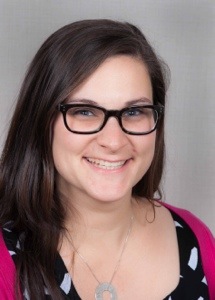
EDITOR’S NOTE: Adapted from an e-mail.
I am thrilled to be serving as the student rabbi in Great Falls next year. I want to introduce myself to the Great Falls Hebrew Association community.
Immediately below you will find a brief introductory paragraph.
Bess Wohlner, a rabbinic education student in the Rhea Hirsch School of Education at Hebrew Union College on the Los Angeles campus, is currently in pursuit of her Masters in Jewish Education and will be ordained as a rabbi in May 2015. She grew up in Shawnee, Kansas and earned her BA in Judaic Studies from the University of Missouri-Kansas City. Before beginning her studies at HUC, Bess worked as the Assistant Educator and Youth Director at Temple B’nai Shalom in Fairfax Station, Virginia. Since being at HUC she has served as a student rabbi at Congregation Havurim in Temecula, California (2010 – 2012), an education intern at University Synagogue in Los Angeles (2012 – 2013). Next year, in addition to the time she’ll spend in Great Falls, she is also the rabbinic intern at Temple Akiba in Culver City, California. When not studying or working, Bess can be found playing her guitar, traveling, and video chatting with her six-year-old niece.
I am very excited to be joining your community next year. Looking forward to meeting you in person in September.
L’shalom,
Bes
Yom Kippur Food Donation Results

Helen Cherry led us in a great program this Yom Kippur; to make a donation of the food we did not eat while fasting.
Well, the results are in. Over Kol Nidre and Yom Kippur, our congregants donated 65 pounds of food, which was all delivered to the Great Falls Food Bank.
Todah Robah to all for your generosity!
The Segal Guide to Fasting on Yom Kippur
Fasting for Yom Kippur (From a Medical Perspective)
Michael M. Segal MD PhD“… a very good site, perhaps even essential … extremely useful hints and tips … should be taken seriously by just about everyone except the most determined masochist.” The Jerusalem Post, 10 October 1997.
Each year on Yom Kippur, Jews wish each other a khatima tova (a good seal in the Book of Life) and tolerable fast. The route to a khatima tova is beyond the scope of this article; the route to an easy fast is simpler to describe. The following are the essentials of human physiology that will help you have a tolerable fast on Yom Kippur:
Don’t get thirsty:
Most people think the difficulty about fasting is feeling “hungry”. However, avoiding thirst is much more important for how you feel. Not only do you avoid the discomfort of thirst but you are also well hydrated and swallow frequently, so your stomach does not feel as empty.
One important way to remain well hydrated is to avoid drinks or foods that cause your body to get rid of water. Such foods and drinks include alcohol, tea, caffeinated coffee and chocolate. Another important rule is to avoid consuming much salt. Salt causes a person to feel thirsty despite having a “normal” amount of water, because extra water is needed for the extra salt. For this reason you should avoid processed foods containing lots of salt such as pickles, cold cuts, or cheese. Most tomato sauces, canned fish and smoked fish have a lot of added salt. Since Kosher meat has a high salt content it may be best to choose a main course such as fresh fish, canned no-salt tuna fish or a de-salted meat such as boiled chicken.
By avoiding these types of foods and drinks in the several hours before a fast, you can avoid either losing water or needing extra water. Other actions that cause the body to lose water, such as perspiring in warm clothing, should also be avoided during the fast.
Don’t start the pre-fast meal on a full stomach:
The pre-fast meal often begins at 5 PM, so a large lunch could prevent you from eating enough immediately before the fast. It is best to have a small lunch, or no lunch at all. A large breakfast early in the day based on cereals, breads and fruits can provide the energy you need during the day, yet these high-fiber foods will be far downstream by the time of the pre-fast meal and will not keep you from eating enough food at the pre-fast meal. A large breakfast is also helpful because it stretches the stomach. After eating breakfast, it is best to consume beverages during the day. This will not fill you up, since liquids are absorbed quickly, and this will ensure that you have absorbed enough fluids during the day to start the pre-fast meal being well hydrated. Be sure to avoid beverages with alcohol or caffeine. You should also drink at least two glasses of fluids with the pre-fast meal because many foods need extra water to be digested properly.
Eat foods that are digested slowly:
Include some foods high in oils and fats in the pre-fast meal, since such foods delay emptying of the stomach and effectively prolong your meal. However, beware of fatty meats or salted potato chips that could load you up with too much salt. Salads and other high fiber foods that are so important in one’s normal diet should be de-emphasized for the pre-fast meal since they travel quickly through the digestive system. Fruit, despite its high fiber content, is worthwhile since it carries a lot of water in a “time-release” form.
Don’t get a headache:
Withdrawing from caffeine produces a headache in people who drink several cups of coffee a day. If you consume this much caffeine in coffee or other foods or drinks you should prepare yourself for the caffeine-free period by reducing or eliminating caffeine from your diet in the days before Yom Kippur. Don’t try to get through the fast by drinking coffee right before Kol Nidre, since this will cause you to lose a lot of water.
Make the meal tasty enough so people will eat:
The pre-fast meal doesn’t have be bland. Spices such as lemon or herbs are fine for fasting, but salt and monosodium glutamate should be reduced as much as possible.
Don’t do a complete fast if you have certain medical problems:
People with medical conditions such as diabetes should consult their doctors and rabbis before fasting. Certain medications need to be taken during Yom Kippur, and it is important to swallow them with enough water to avoid pills getting stuck on the way to the stomach and damaging the esophagus. Fasting by women who are pregnant or breast feeding can also be dangerous. If a young person who has not fasted much before has unusual difficulty fasting you should discuss this with your doctor since this happens in some serious metabolic problems in which fasting can be very dangerous.
Don’t eat improperly after Nei’la:
Even people who have prepared well for fasting will be hungry after Neila. Be sure not to eat food too quickly at the post-fast meal. Begin the break-fast meal with several glasses of milk or juice: these put sugar into the bloodstream and occupy space in the stomach, discouraging you from eating too rapidly. Also be careful about eating high salt foods such as lox, since you will still be a little dehydrated and will need to drink a lot of fluids to avoid waking up extremely thirsty in the early morning hours.
These preparations for the fast of Yom Kippur will be different from your normal routine, but they can serve as a concrete reminder of the approaching Day of Atonement.
An earlier version of this article appeared in the Jewish Advocate (Boston, USA) in 1989. Copyright © 1989 – 2011 Michael M. Segal, MD, PhD. This document may be reproduced freely on a non-profit basis, including electronically, through 2011 as long as the source at www.segal.org/kippur/ is indicated and this copyright notice is included.
5772 YOM KIPPUR SCHEDULE 2011

Image by Center for Jewish History, NYC via Flickr
All services are led by Cantor Elliott Magalnick
Friday October 7
- Kol Nidre services are 7:00 P.M. at the Bethel, 1009 18th Ave SW, Great Falls
Saturday October 8
- Yom Kippur services begin on Saturday morning, October 8 at 10:00 A.M. at the Bethel, 1009 18th Ave SW, Great Falls.
- 10:00 A.M.-12:00 P.M. Morning Services
- 12:00 P.M.-2:00 P.M.: 2-hour break
- 2:00 P.M.-4:00 P.M. Adult Discussion, STORAHtelling on Jonah by Cantor Elliot Magalnick
- 4:00 P.M.-5:00 P.M.: 1-hour break
- 5:00 P.M.-5:45 P.M. Yizkor
- 5:45 P.M.-6:15 P.M. Minhah
- 6:15 P.M.-7:00 P.M. Neilah
- Following evening services: Break The Fast milchig (dairy) pot luck.
KRTV Reports on our Tashlich service

Image via Wikipedia
KRTV news came to our Tashlich service this afternoon at Giant Springs.
HIGHLIGHTS FROM THE ANNUAL CONGREGATIONAL MEETING 2011
EDITOR’S NOTE: These are not the full minutes. They can be requested from any board member or from Nadyne.
ELECTIONS: Board members whose terms are up are Helen, Steve & Laura. They have each agreed to stand for re-election. During Rosh Hashanah, an announcement will be made asking if there is anyone else interested in running for the Board. Ballots will be made and distributed on Rosh Hashanah. Only GFHA members will get ballots. Voting will continue through Yom Kippur, at which time all ballots will be collected and tabulated by Nadyne. If a member needs a ballot, please contact Nadyne by email or through the web site.
CEMETERY POLICY: Laura sent around some ideas of what is acceptable for Reform policies for the Jewish section of the Mount Olivet cemetery: She will send it around again so that we can review the suggested policy and add to it if necessary. Laura signed and sent the agreement to Mount Olivet officials, so we have a fully signed agreement with them for our portion of the cemetery. Laura will get a copy for our files.
Will you Serve on the Aitz Chaim Board?
There are three positions up for re-election for the Aitz Chaim Board of Trustees. Those positions are currently held by Laura Weiss, Helen Cherry and Steve Boyd.
Laura, Helen and Steve have offered to run for re-election. Any adult member of the congregation is eligible to run for any of these three board positions. Candidates must be Jewish members in good standing of the Great Falls Hebrew Association. In addition to the three board members running for re-election, there will be several blank lines on the ballot for write-in candidates. Please comment below if you are interested in announcing your candidacy for the Board.
Board elections will take place during our congregation services over the High Holy Days. Nadyne Weissman will have ballots, please go find her to vote. Results will be announced during our Yom Kippur Break the Fast potluck meal on Saturday, October 8.
The Concept of Time, by Hazzan Magalnick

- Image via Wikipedia

Dear Congregation;
Judaically or scientifically we have a concept of time. The passing of time may be viewed in at least two ways: spiral time or linear time. In spiral time we look at events at a higher level. We experience an event or we read about it, and then, as time passes, we re-enact it to bring us back emotionally to the event, and to discover or rediscover the significance of the event in our current everyday lives. In linear time, after the event happens, time passes, and passes, and passes … and as we get farther and farther away from the event, we lose our focus and our interest, and we lose the significance that the event had in our lives.
In Judaism, one way that we maintain our focus and our interest in past events of significance in our heritage and in our lives is by re-enacting our holidays. In the spiral time concept, we move in time lines that resemble elliptical circles. We keep in touch with events from our history by celebrating a Passover Seder, building and inhabiting a Succah, or engaging in repentance on Yom Kippur. It is this elliptical movement of thought in relation to events in our collective history that makes those events continue to be pertinent in our lives. Since the time line in Judaism curves backward, we do not forget- nor do we minimize the importance of our ancestors and what their deeds and their lives mean to us today.
In this season of solemnity, we reflect not only upon our recent personal history, but also upon our long Jewish history. We set goals to take more responsibility for our individual actions and those of our community — not just for our immediate benefit, but also for the benefit of those future generations who will follow after us and look back at our deeds and our lives as Jews and remember our influence in their own lives. May we remain strong and vibrant in this coming year.
Last year on Rosh Hashanah I wished that we all would come back together this year,, happy, healthy, and even more fulfilled in our Jewish lives. My wish and my blessing for this year is that we all continue to meet and pray together, that we all continue to be well, and that we all come back together again for next year.
May our children and grandchildren grow older and smarter. may we keep our health, our hair, our teeth, our sight, our hearing and our love of each other.
‘L’SHONA TOVA TIKVATENU’
Cantor Elliott

 The Aitz Chaim Ram's Horn