Category Archives: Uncategorized
Today is Tu B’Shevat!
(Ed note, this was sent to us last night by the “Shabbos Lighting times” website)
Significance, and customs of Tu b’Shevat – ט״ו בשבט
Tu b’Shevat ט״ו בשבט – is a minor Jewish Holiday that marks the New Year of the Trees – Rosh HaShanah La’Ilanos ראש השנה לאילנות. It is also called Chamisha Asar B’Shevat (חמשה-עשר בשבט), also meaning the fifteenth of Shevat.
The Fifteenth of Shevat is the midpoint of winter and we are looking forward to the spring. The sap of the trees is beginning to flow and rise in the roots of the trees, though unseen by man and as a result the fruits are manifesting their first stage of formation.
The Rosh Hashana for Trees is a time of Tefilla (Prayer). We joyously celebrate this day in asking Hashem to continue to shower his benevolence on his children the Bnei Yisrael as well as the rest of his creations in the world as it says in Bircas HaMazon “Hazon es HaOlam Kulo Betuvo” (He Nourishes the entire world in his goodness).
Tu b’Shevat is one of four “New Years” mentioned in the Mishnah in Tractate Rosh Hashanah as one of the four new years in the Jewish calendar. The discussion of when the new year for trees occurs was a source of debate among the Rabbis. The Rabbis ruled in favor of Hillel on this issue. Thus the 15th of Shevat became the date for calculating when the agricultural cycle began or ended for the purpose of Orlah (a), Neta Reva’i(b), Maaser Sheni and Maaser Ani(c), involving trees and fruit.
a. Orlah refers to a biblical prohibition on eating the fruit of trees produced during the first three years after they are planted.Orlah remains to this day in essentially the same form it had in talmudic times and uses Tu Bishvat in the same way. For a tree in its final year, fruit ripening before Tu Bishvat is considered orlah, while fruit ripening on or after Tu Bishvat in the final year is permitted.
b. Neta Reva’i refers to the biblical commandment to bring fourth-year fruit crops to Jerusalem as a tithe.
c. Maaser Sheni was a tithe which was eaten in Jerusalem and Maaser Ani was a tithe given to the poor that were also calculated by whether the fruit ripened before or after Tu Bishvat. Maaser Sheni and Maaser Ani are observed today by a ceremony redeeming tithing obligations with a coin. Because the form of redemption is the same for both of these latter obligations, the year of the fruit no longer matters for these tithes.
Customs of Tu b’Shevat ט״ו בשבט – By Rabbi E. Wenger
• It is customary to increase in the amount of fruits one eats on the 15th of Shevat, in order to praise G-d who created all these species of fruits.
• In particular, one should include among the fruits one eats on this day the species of fruit which the land of Israel is praised for: grapes, olives, dates, figs and pomegranates.
• One should make an effort to eat at least one fruit which one has not eaten that entire season, and would require the blessing of Shehecheyanu. When eating such a fruit, the Shehecheyanu should be said prior to reciting the blessing of “Haetz.” {Some have the custom to recite the blessing of “Haetz” first and then the blessing of Shehecheyanu.} If he has already partaken of other fruits (at that particular sitting) than he only needs to say the Shehecheyanu upon eating the new fruit.
• Many also have a custom of eating carob on this day. (1) There is yet another custom which many have and that is to eat the Etrog from the previous Succos, either in the form of preserves, sugared slices, etc.(2) {Some pray that they will be worthy of a beautiful etrog on the following Sukkot.}
• It was the custom of the famed Kabbalist Rabbi Isaac Luria (“Arizal”) to eat 15 varieties of fruits on the 15th of Shevat. {Rabbi Luria and his disciples also instituted a Tu Bishvat seder in which the fruits and trees of the Land of Israel were given symbolic meaning.}
• On this day Tachnun is omitted from the Shacharis and Mincha prayers as well as from the Mincha prayer on the afternoon beforehand.
• Just like on three of the New Years a Taanis is forbidden (The first of Nissan, The first of Elul and the first of Tishrei), so to the fourth which is the Fifteenth of Shevat it is forbidden to fast. Even a Chasan on the day of his Wedding is not to fast on Tu B’ Shevat.
• We also don’t say Kaal Erech Apiem on Monday and Thursday in addition to not saying Av HaRachamim on Shabbos as well as Tzedkesecha Tzedek by Mincha on Shabbos.
• Many are accustomed not to give Eulogy’s (Hespeidim) on Tu B’Shevat.
1 It is questionable whether one says a Shehecheyanu when eating carob, since it is inedible when fresh. One must wait until it hardens a bit before it becomes edible and then the new carob is no longer distinguishable from older stock and thus would be similar to nuts upon which no Shehecheyanu is said (see Sefer Bircas HaShir Vehashevach for further elaboration).
2 It seems that the consensus of opinions is that no Shehecheyanu is said on the Etrog. One reason given is that the Shehecheyonu has already been said over the Esrog on the first day of Succos. (see Nitei Gavriel, Laws of Tu Beshevat 2:7).
Lz”n Gittel Charna bas Yaakov a”h
Lz”n Rochel bas Yisroel a”h
Stanley Rosenberg
Received from Rabbi Ed Stafman in Bozeman, today:
As I announced with sadness a few days ago, our congregation lost a giant of Bozeman’s Jewish community, Stanley Rosenberg, last week. Stanley passed away peacefully on Thursday, January 26, with his son, Archie, at his side. For any who might not know, Stanley was the spiritual leader of Bozeman’s Jewish community since its inception until it finally had a rabbi. Stanley performed and lead weddings, b’nei mitzvah, baby namings and much more. Stanley not only served the Bozeman Jewish community for some 20 years, but he represented us with honor and dignity in the interfaith community. All of Stanley’s life was lived in the name of greater shalom, peace and shalem, wholeness.Many have asked about plans for a memorial service. In order to accommodate the many family members from distant places who wish to attend, the memorial service will take place on Sunday, March 18, at 3:00 p.m., in the sanctuary of Congregation Beth Shalom.In the meanwhile, we said kaddish for Stanley this past Friday night and will continue to say kaddish for him at every service over the next year. All are welcome to participate in that.Zichrono livracha (may his memory be a blessing),Rabbi Ed
Obituary from Bozeman Daily Chronicle:
Stanley Gerson Rosenberg (1924-2012)

Stanley Gerson Rosenberg, 87, passed away Jan. 26, 2012, at his home in Bozeman.
Stan was a founding member of Congregation Beth Shalom where he served as a lay Rabbi for some fifteen years, during which he performed many rituals and led many celebrations, and where he especially promoted interfaith dialogue, cooperation, and peace. He was a member of numerous community organizations including Career Transitions, Big Brother and Big Sisters, The United Way, and The Gallatin Valley Interfaith Association, which he helped found. He served as a board member of Valley View Golf Course, and Chair of the Ethics Committee of Gallatin Rest Home. He was also an avid booster of MSU women’s athletics.
Stan was born June 20, 1924 in Philadelphia, Pa. to Esther (Binder) and Barney Rosenberg. He attended Philadelphia public school and graduated in 1942. After graduation, Stan worked as a butcher’s apprentice and ship fitter’s helper. He entered the Army in January 1943, and was assigned to the 312th combat engineers, 87th infantry division. He was sent to England and France, and almost immediately was in combat. He eventually participated in the battle of Belgium during the bulge. His unit then went through Germany and crossed the Rhine River at Boppard Am Rhein, not stopping until the border of Germany and Czechoslovakia, where he witnessed the liberation of a concentration camp. After the war, Stan returned to Pennsylvania.
Stan enrolled at what was then Williamsport Dickinson Junior College and Seminary, where he majored in sociology and anthropology. In his junior year, Stan met and married Dorothy Cohick, who was majoring in library science. They both finished their degrees in 1950 at Denver University.
Stan eventually was a principal/teacher of a one-room boarding school with 35 Indian students, half of whom did not speak English, on the Navajo Reservation, at Kayenta, Ariz. Stan and Dorothy adopted a two-month-old baby boy, Archie, from the Clinton Indian Hospital, in Clinton, Okla.
Stan later transferred to Pueblo Pintado, N.M., where he once again taught at a one-room school of 35 Indian students, half of whom did not speak English. Dorothy taught with Stan. The following year, Stan was transferred to Aneth, Utah, where he taught at a two-teacher school. Stan was later a community health worker with the Indian Health Service in Shiprock, N.M., where he set up well-children clinics, involving medicine men and other community leaders in those clinics.
He later earned his master’s degree at the University of California, Berkley, School of Public Health. He was then recruited to participate in a Pap smear program in St. Louis, Ill. While in St. Louis, Stan and Dorothy adopted six-year-old Jeffrey, from Italy. Thereafter, Stan was assigned to the Heart Disease Control Program with the New Jersey State Department of Health. His next assignment was in Rutland, Massachusetts, in patient/family education at a long-term care hospital. Stan later took jobs of Assistant Director Office of Education and Training with the Hill-Burton Program, the Nursing Home Improvement Program, and the Nursing Home Surveyors Training Program, where he remained until his retirement in 1978.
Stan received numerous honors for his work in public health. He was a Distinguished Fellow of the Society of Public Health Educators and Fellow of the American Public Health Association. Stan received three master’s degrees and an honorary doctorate.
Stan and Dorothy moved to Montana for Stan to accept a position as an adjunct professor with the School of Nursing at Montana State University. Four years later, Stan left the university and devoted the next 30 years to community involvement and to Bozeman Jewish and interfaith life.
In 1998, his wife Dorothy, of almost 50 years passed away, at which time Stan set up a memorial fund at MSU in his wife’s honor for women’s athletics.
In September 1999, Stan married the lovely June Goldstein Bollet, who passed away last December.
Stan is survived by his sons, Archie of Norman, Okla., and Jeffery of Bozeman; four grandchildren, Melissa Lynn Wallace, Briane Pearl Rosenberg, A’Lexxis Preciosa Rosenberg, of Okla., and Britney Rosenberg of Bozeman; and four great-grandchildren, Ashlynn Lauren Wallace, Peyton Mackenzie Wallace, Mason Nicole Wallace, of Oklahoma, and Kylie Thompson of Bozeman.
Stan told his Rabbi, his doctor, and friends that he had lived a good, long, and fruitful life, and that is what he wished to be remembered for.
A memorial service will be held at 3 p.m. March 18 at Congregation Beth Shalom, Bozeman. In lieu of flowers, the family has asked that memorials be made to Congregation Beth Shalom.
Arrangements are in the care of Dokken-Nelson Funeral Service, http://www.dokkennelson.com.
Published in Bozeman Daily Chronicle on January 31, 2012
Mazel Tov, Sheldon!
Congregant Evelyn Kelman writes to inform us that former Aitz Chaim lay-leader and Great Falls resident Sheldon Masnek has become a great-grandfather for the second time!
Mazel Tov, Sheldon, on the simcha of your new great-grandson and your great-granddaughter!
Scout Shabbat and Lag B’Omer commemorated during May services
The Great Falls Jewish Community will help mark Scout Shabbat at our scheduled services over the May 4-6 weekend. Scouts attending that service will qualify for the Scout Shabbat patch for 5772!
As this service and visit by Student Rabbi Rebecca Reice will fall in proximity to Lag B’Omer, we will again mark the occasion with a bonfire after havdalah on Saturday, May 5. Perhaps a Scout or two in attendance could help us get that fire lit?

 Scout week is coming! As part of our celebration of Scouting’s 102nd birthday, we will be commemorating Scout Sunday on February 5 and Scout Shabbat on February 11.
P.R.A.Y. and the Jewish Committee on Scouting have put together a beautiful pair of patches to mark Scout Shabbat and Scout Sunday. To earn the patches, simply attend religious services in your Scout uniform.

As the Great Falls Jewish Community will not be meeting in February, Scouts wishing to earn the Scout Shabbat patch should attend those services as noted at aitzchaim.com.
Related articles
- Scouting is 102 Years Young (gfpack7.wordpress.com)
Exciting adult learning announcement from the URJ
Shalom!
We are excited to announce that the URJ is honored to be a recipient of a Covenant Foundation Grant for the continuation and expansion of the Adult Jewish Living and Learning Journeys Project.
This grant of more than $100,000 over the next two years will allow us to provide additional free short courses, or modules, designed for volunteer and professional teachers of adults to teach.
In addition, we will hold four more retreats for adult learning teachers and facilitators. Our next module on “Four Questions of Reform Judaism” with an accompanying DVD should be posted in the spring. We will send out more information as it becomes available, or you may check back to the project page for updates.
L’Shalom,
Vicky
Vicky Farhi
Lead Outreach Specialist, Congregational Consulting
Co-Leader, Small Congregations Networking Group
Union for Reform Judaism
212-650-4247
 urj.org
 Facebook
 Twitter
 Blog
BlogAitz Chaim Gathers for the First night of Chanukah
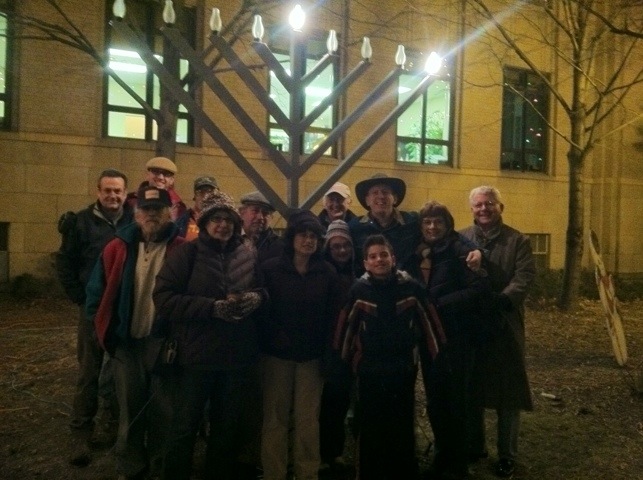
Chanukah has begun! Join us (promptly) at 5:30 each evening of Chanukah in front of the Civic Center for the lighting of the Diane Kaplan Memorial Civic Center Chanukiah.
Happy Chanukah!
Chanukah is tonight!
The festival of lights is upon us! Join us for a public lighting of the Diane Kaplan Memorial Civic Center Menorah at 5:30pm.
Treasure State Lifestyles Magazine article about Chanukah
Great Falls Lifestyles Magazine, out this month, published a nice article about Chanukah, featuring an interview with congregations Aaron and Wendy Weissman. You can read it here.
Noted Montana Composer Daniel Buckvich writes Chanukah Children’s Dance
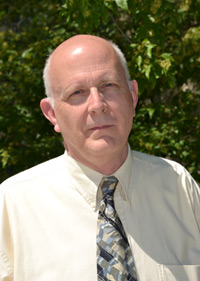 Butte native and noted American modern composer Daniel Buckvich recently wrote a Chanukah Children’s Dance! The gorgeous piece is available on his website.

 The Aitz Chaim Ram's Horn