Author Archives: Aaron Weissman
Beth Shalom Summer Camp for Older Youth
Shalom!
It’s that time of year again – planning summer for your kids. This year, we are pleased to announce that Congregation Beth Shalom will again be hosting a summer camp for youth 11-18. Please forward this email on to other parents I might have missed.
August 13-17 is for young people 11-18 and is open to youths all over Montana. Jenny Rassaby is coordinating this camp, which is designed for an older group of Jewish kids, providing them with an enriching opportunity to meet with peers, learn more about their Jewish culture, heritage and traditions and have fun! Participants from outside Bozeman will stay with their Beth Shalom peers and their families. For more information, and to register, contact Jenny Rassaby at rassabies@gmail.com, or phone 406 579 3846.
The camp is $175 for the week, including food and other costs.
Registration forms are attached. Forms are due to Beth Shalom by July 1.
Camp Signup form: BSyouthcamp_signup_form_2012
Mark Your Calendar for Beth Shalom Summer Camp in Bozeman!
For the second year, Congregation Beth Shalom in Bozeman will be hosting a Montana Youth Summer Camp for Jewish youth, 12 years old and up. This year, the camp will be during the week of August 13 -17, with arrivals on Sunday afternoon at the Rassaby home. Camp counselors will be provided by the Israeli outreach group Soultrain.
For more information, contact Camp Director Jenny Rassaby Ryan at rassabies@gmail.com.
Reminder: Pesach Community Seder Reservations due by March 30
Pesach is just around the corner! You are invited to our community Pesach seder. If you are coming, please get in your reservation by Friday, March 30.
You can fill in an online reservation here. You can also just send an email to Laura Weiss, president@aitzchaim.com. Make your reservation today!
What if Moses had Google, Facebook and Youtube?
Pesach items for sale at 10th Ave S Albertsons

Photo of pesach food display at 10th ave S Albertson's in GTF
Related articles
- Passover is Almost Here! (aitzchaim.com)
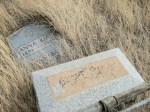
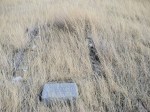
Eaton Road Jewish Cemetery, South of Great Falls
Yesterday I had the opportunity to take some photos at the historic Jewish Cemetery near Eaton Road.
This Summer, I propose that our congregation have a work party day there. Between road access, the fence, crumbling monuments, etc., we could make a very positive impact in this cemetery, which our congregation has managed since the early 1910s.









Minyan Call for the Funeral of Alan Silverstein, Thursday at 1 p.m.

Allan Bruce Silverstein, 59, of Great Falls, a detention officer, died of natural causes Monday, March 12, at his home. There will be a gathering at Croxford Funeral Home at 1 p.m. Thursday, to proceed to the Old Jewish Cemetery, where a graveside service will be held. Rabbi Chaim Bruk of Chabad Lubavitch of Montana will officiate at the funeral and gravesite service.
Allan was born June 28, 1952, in Brooklyn, N.Y. He graduated from G.W. Hewlett High School in Hewlett, N.Y., went to Miami University, and also went to the University of Montana in Missoula.
In 1980, he married Jodi Cantor in North Woodmere. They divorced in 1992. In 1999, he married Kelly Daily in Great Falls. They divorced in 2007.
Allan is survived by sons Errol, Andrew and Daniel Silverstein; sisters Bonnie Shiner and Sheree Cohen; and brothers Michael Silverstein and David Silverstein.
He was preceded in death by his parents, Herman and Laura (Daskal) Silverstein
“The Best Dad Ever” Allan Silverstein was one of a kind. His unconditional support of the most majestic dreams was the breath of his selfless devotion to family, love and truth. The sincerity of this free spirit, who lived for everyone he loved first, putting their needs before his own, made the world a better place – always. In his compassion, he was perfect. We will love him forever and ever.
“Love you, you’re greatest, always be that way in my heart.”
Passover is Almost Here!

How did it get to be March already? Spring–and Passover–will be here before we know it!
Once again, Congregation Aitz Chaim will be hosting a community Pesach seder. Our community seder this year will be on the first evening of Pesach, Friday, April 6. By popular demand, the Seder will again be catered by and held at Clark and Lewies restaurant in downtown Great Falls. Aaron Weissman will lead the seder.
Details have not yet been finalized, but watch this page for specific times, prices and a reservation form!
Related articles
- Aitz Chaim Spring Schedule (aitzchaim.com)
Today is Tu B’Shevat!
(Ed note, this was sent to us last night by the “Shabbos Lighting times” website)
Significance, and customs of Tu b’Shevat – ט״ו בשבט
Tu b’Shevat ט״ו בשבט – is a minor Jewish Holiday that marks the New Year of the Trees – Rosh HaShanah La’Ilanos ראש השנה לאילנות. It is also called Chamisha Asar B’Shevat (חמשה-עשר בשבט), also meaning the fifteenth of Shevat.
The Fifteenth of Shevat is the midpoint of winter and we are looking forward to the spring. The sap of the trees is beginning to flow and rise in the roots of the trees, though unseen by man and as a result the fruits are manifesting their first stage of formation.
The Rosh Hashana for Trees is a time of Tefilla (Prayer). We joyously celebrate this day in asking Hashem to continue to shower his benevolence on his children the Bnei Yisrael as well as the rest of his creations in the world as it says in Bircas HaMazon “Hazon es HaOlam Kulo Betuvo” (He Nourishes the entire world in his goodness).
Tu b’Shevat is one of four “New Years” mentioned in the Mishnah in Tractate Rosh Hashanah as one of the four new years in the Jewish calendar. The discussion of when the new year for trees occurs was a source of debate among the Rabbis. The Rabbis ruled in favor of Hillel on this issue. Thus the 15th of Shevat became the date for calculating when the agricultural cycle began or ended for the purpose of Orlah (a), Neta Reva’i(b), Maaser Sheni and Maaser Ani(c), involving trees and fruit.
a. Orlah refers to a biblical prohibition on eating the fruit of trees produced during the first three years after they are planted.Orlah remains to this day in essentially the same form it had in talmudic times and uses Tu Bishvat in the same way. For a tree in its final year, fruit ripening before Tu Bishvat is considered orlah, while fruit ripening on or after Tu Bishvat in the final year is permitted.
b. Neta Reva’i refers to the biblical commandment to bring fourth-year fruit crops to Jerusalem as a tithe.
c. Maaser Sheni was a tithe which was eaten in Jerusalem and Maaser Ani was a tithe given to the poor that were also calculated by whether the fruit ripened before or after Tu Bishvat. Maaser Sheni and Maaser Ani are observed today by a ceremony redeeming tithing obligations with a coin. Because the form of redemption is the same for both of these latter obligations, the year of the fruit no longer matters for these tithes.
Customs of Tu b’Shevat ט״ו בשבט – By Rabbi E. Wenger
• It is customary to increase in the amount of fruits one eats on the 15th of Shevat, in order to praise G-d who created all these species of fruits.
• In particular, one should include among the fruits one eats on this day the species of fruit which the land of Israel is praised for: grapes, olives, dates, figs and pomegranates.
• One should make an effort to eat at least one fruit which one has not eaten that entire season, and would require the blessing of Shehecheyanu. When eating such a fruit, the Shehecheyanu should be said prior to reciting the blessing of “Haetz.” {Some have the custom to recite the blessing of “Haetz” first and then the blessing of Shehecheyanu.} If he has already partaken of other fruits (at that particular sitting) than he only needs to say the Shehecheyanu upon eating the new fruit.
• Many also have a custom of eating carob on this day. (1) There is yet another custom which many have and that is to eat the Etrog from the previous Succos, either in the form of preserves, sugared slices, etc.(2) {Some pray that they will be worthy of a beautiful etrog on the following Sukkot.}
• It was the custom of the famed Kabbalist Rabbi Isaac Luria (“Arizal”) to eat 15 varieties of fruits on the 15th of Shevat. {Rabbi Luria and his disciples also instituted a Tu Bishvat seder in which the fruits and trees of the Land of Israel were given symbolic meaning.}
• On this day Tachnun is omitted from the Shacharis and Mincha prayers as well as from the Mincha prayer on the afternoon beforehand.
• Just like on three of the New Years a Taanis is forbidden (The first of Nissan, The first of Elul and the first of Tishrei), so to the fourth which is the Fifteenth of Shevat it is forbidden to fast. Even a Chasan on the day of his Wedding is not to fast on Tu B’ Shevat.
• We also don’t say Kaal Erech Apiem on Monday and Thursday in addition to not saying Av HaRachamim on Shabbos as well as Tzedkesecha Tzedek by Mincha on Shabbos.
• Many are accustomed not to give Eulogy’s (Hespeidim) on Tu B’Shevat.
1 It is questionable whether one says a Shehecheyanu when eating carob, since it is inedible when fresh. One must wait until it hardens a bit before it becomes edible and then the new carob is no longer distinguishable from older stock and thus would be similar to nuts upon which no Shehecheyanu is said (see Sefer Bircas HaShir Vehashevach for further elaboration).
2 It seems that the consensus of opinions is that no Shehecheyanu is said on the Etrog. One reason given is that the Shehecheyonu has already been said over the Esrog on the first day of Succos. (see Nitei Gavriel, Laws of Tu Beshevat 2:7).
Lz”n Gittel Charna bas Yaakov a”h
Lz”n Rochel bas Yisroel a”h

 The Aitz Chaim Ram's Horn